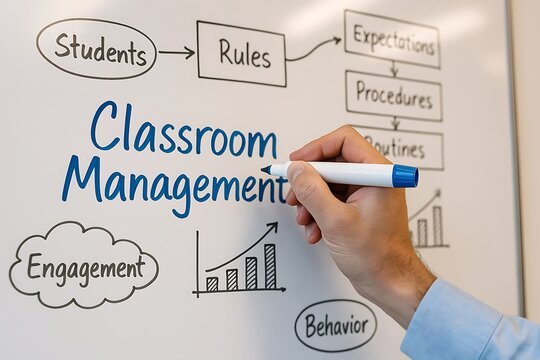
Philosophy of Classroom Management
My philosophy of classroom management is moving away from strict seating charts, punishments, and reactive teaching, to a more proactive, positive learning environment. I utilize Positive Behavior Supports and Interventions to teach appropriate behaviors at the start of the school year and identify any additional skill deficits students might have. I use positive expectations, explicit modeling, and positive reinforcement strategies for all students before identify students who require more targeted or intensive support. In essence, I believe that classroom management is not a means of pure control, but a method of facilitating growth.
My ultimate objective is to get students to a point of self-management and regulation, that can apply skills and strategies learned to other areas of their lives. I desire students to learn to manage their behavior not out of fear of punishment, but out of respect for themselves and their communities.
-
Teaching is the intentional act of creating a nurturing and consistent environment. An effective teacher acts as a scaffolder, using task analysis to provide the necessary support for students to be successful.
-
Learning is the process of meaning-making. Students take new information and add it to their schema and are able to generalize that information into all areas of their life.
-
Students are unique and diverse individuals that enter the classroom with a unique set of experiences, languages, and perspectives that are assests in forming a deeper relationship with that student.
-
It is my responsibility as a teacher to foster a respectful and trusting relationship with my students. I want students to do things because of the expectations of the classroom, and not because “I said so.”
I expect my students to hold themselves accountable and expect me to be consistent, transparent, and empathetic. I want to be authoritative, not authoritarian, and provide the structure necessary for students to feel safe enough to focus on their learning.
I strive to create a respectful relationship with students’ families. I work to understand personal culture and represent it in my classroom. I want to bridge the gap between home and school and involve families in their child’s learning.
-
I believe that being proactive instead of reactive is the best management style. Using clear, concise, and consistent expectationsa and procedures is the foundation for limiting undesired behaviors. From there, I physically arrange my classroom to enhance focus, limit distractions, and reduce clutter to foster a high-quality learning environment.
Instead of “rules,” I use classroom expectations to encourage cooperative behavior from students. Depending on their age, I ask for input on classroom norms and reinforcements. This creates buy-in for students to want to follow the expectations and stay invested in the positive reinforcement system I utilize.