Classroom Management
My classroom management plan is based on the idea that planning for behavior before students arrive is the most effective way to prevent problems. My philosophy centers on creating a safe and positive climate where students are actively engaged in learning. I believe that my classroom should feel safe enough for students to want to be everyday, then they are less likely to exhibit undesired behaviors. I am the role model by using respectful language and treating students like individuals that I have the pleasure of teaching, rather than a class of kids that were assigned to me. By building strong relationships I create a protective buffer for students who have experienced trauma or have stressors outside of school. This includes using active listening to help students identify their feelings and help them choose safe, healthy alternatives to expressing those feelings.
To meet students’ physical, emotional, and learning needs, I use active listening to help students identify their feelings and help them choose safe, healthy alternatives to expressing those feelings. I use my daily schedule to plan consistent routines and transitions and to maximize opportunities for high levels of Academic Learning Time. I will be prepared for activites by task analyzing activites before teaching them, using the gradual release of responsibility model to model learning, and planning breaks between subjects for students to refresh their brains for additional learning. I also provide students with choices and input to give them personal buy-in and control of their environment, by utilizing controlled choices that encourage them to do a necessary task the way they choose to do it.
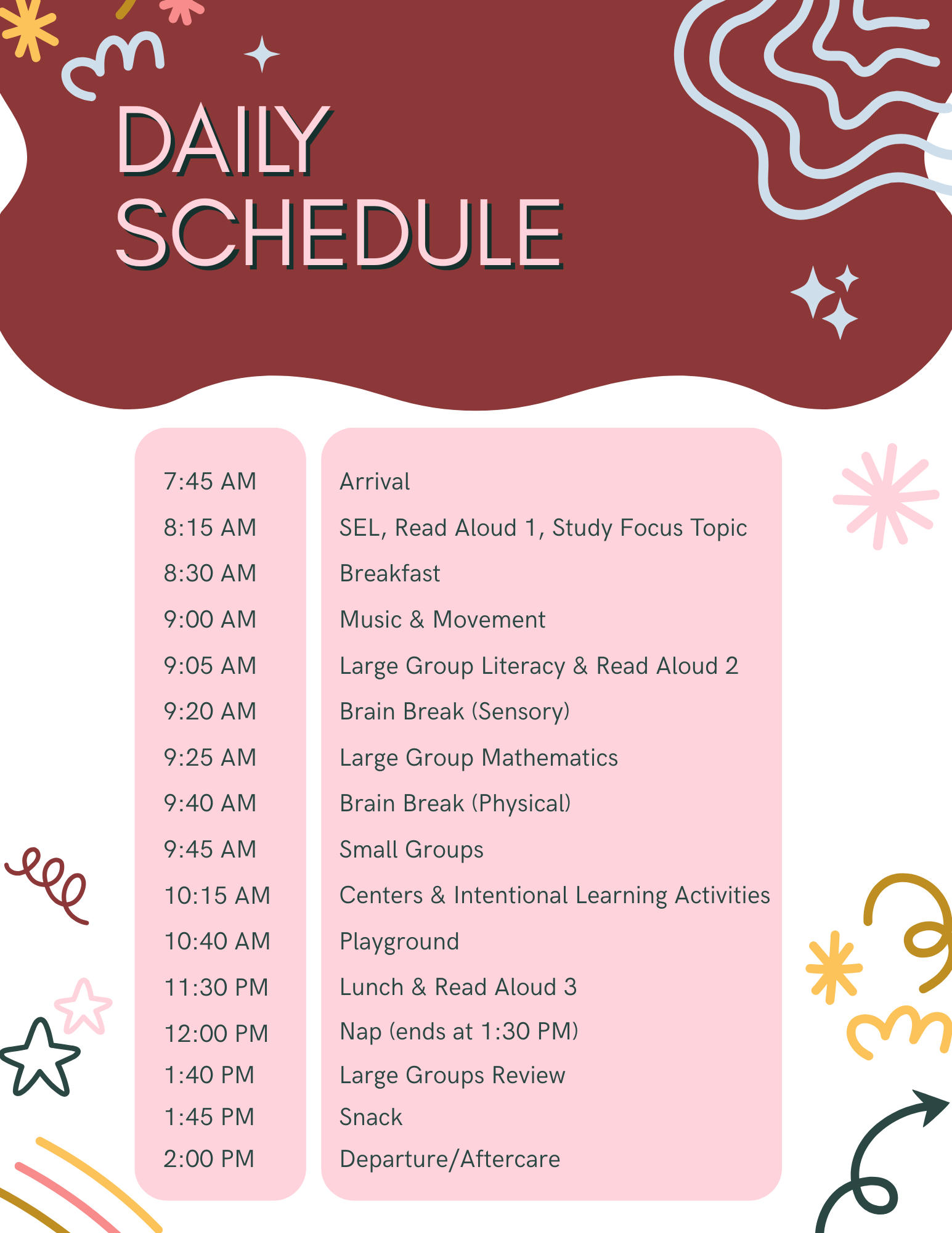
My classroom uses a daily schedule that prioritizes literacy and mathematics in the morning, when students are more likely to be receptive to learning. Utilizing strategies learned in Chapter 5, I identified my blocks that I cannot change, like arrival, mealtimes, playground time, nap, and departure. My scheduled playground time is right before lunch, so it sets my classroom up for academic success by giving me the whole morning to touch on literacy and mathematics when students are the most alert and engaged.
By creating a nurturing, consistent and predictable routine and environment, I anticipate reducing undesired behaviors from students and setting myself and students up for success.
Classroom Arrangement
Daily Schedule
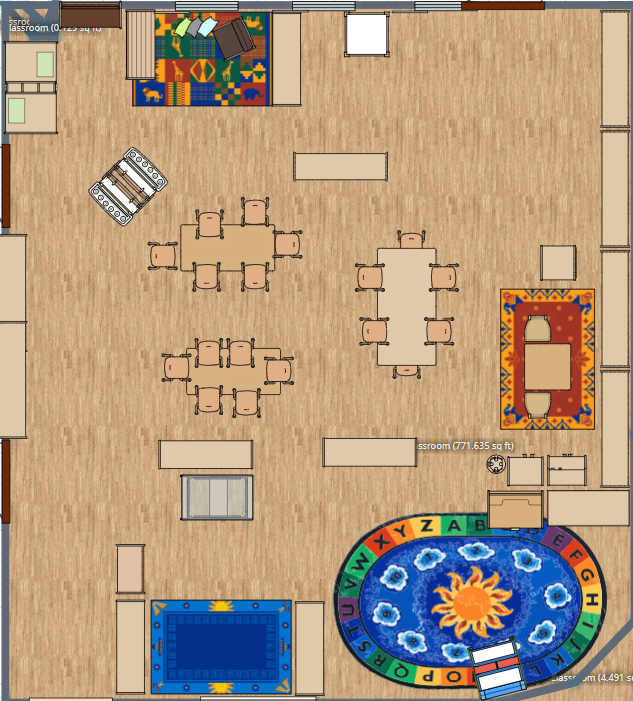
My ideal preschool classroom has high-energy areas separated from calmer areas. I put my writing center, safe place, library, and science centers in the back of the classroom. These areas require minimal supervision, and are less desired areas.
High traffic areas like dramatic play and blocks are closer to the front of the classroom to be supervised at all times from multiple angles. Since my cubbies are built into the wall, I put dramatic play in front to better utilize the space and keep it open for foot traffic at arrival, nap time, and departure.
I use my small group tables for my art center, so activities like playdough, kinetic sand, and collages can have ample space. I placed the art easel near the restroom door so students can quickly access the sinks to wash their hands. I plan to limit paint activities to two students, so the art easel is perfect for that.
I wanted to put my sensory table in science, but then it would be the furthest away from a hand sink,so I placed it behind my mathematics shelf. It keeps it well supervised and near a handsink.
For my large group meeting area, I moved the music cart next to the desk to better control volume and supervision. I did my best to enclose the large group area so that students are encouraged to stay in that area and less likely to slip into other centers. I have a learning center cart that I can easily roll out of the way for music and movement and towards the small group tables to continue instruction.
While my science center has more than enough space, I wanted that space to be as clear as possible for when my class lines up to go to the playground. It keeps the emergency exit door clear and makes it easier for students to line up without obstacles like shelves or toys in the way.